
Found Arrangement
Found arrangement (野趣插花) does not begin with flowers. It begins with the decision to stop somewhere — at the edge of a path, beside a wall, in the moment before you would have kept walking — and pick something up.
A branch of chrysanthemum gone sideways at the joint. An acorn stem still holding its cap. A length of dried grass that caught the light at an angle you couldn't explain. The practice translates as found arrangement, though the direct translation of ye qu (野趣) is wild-interest — the quality of attention that wildness requires. The untended thing at the margin of the tended world.
What you do with what you've found depends almost entirely on what you put it in.

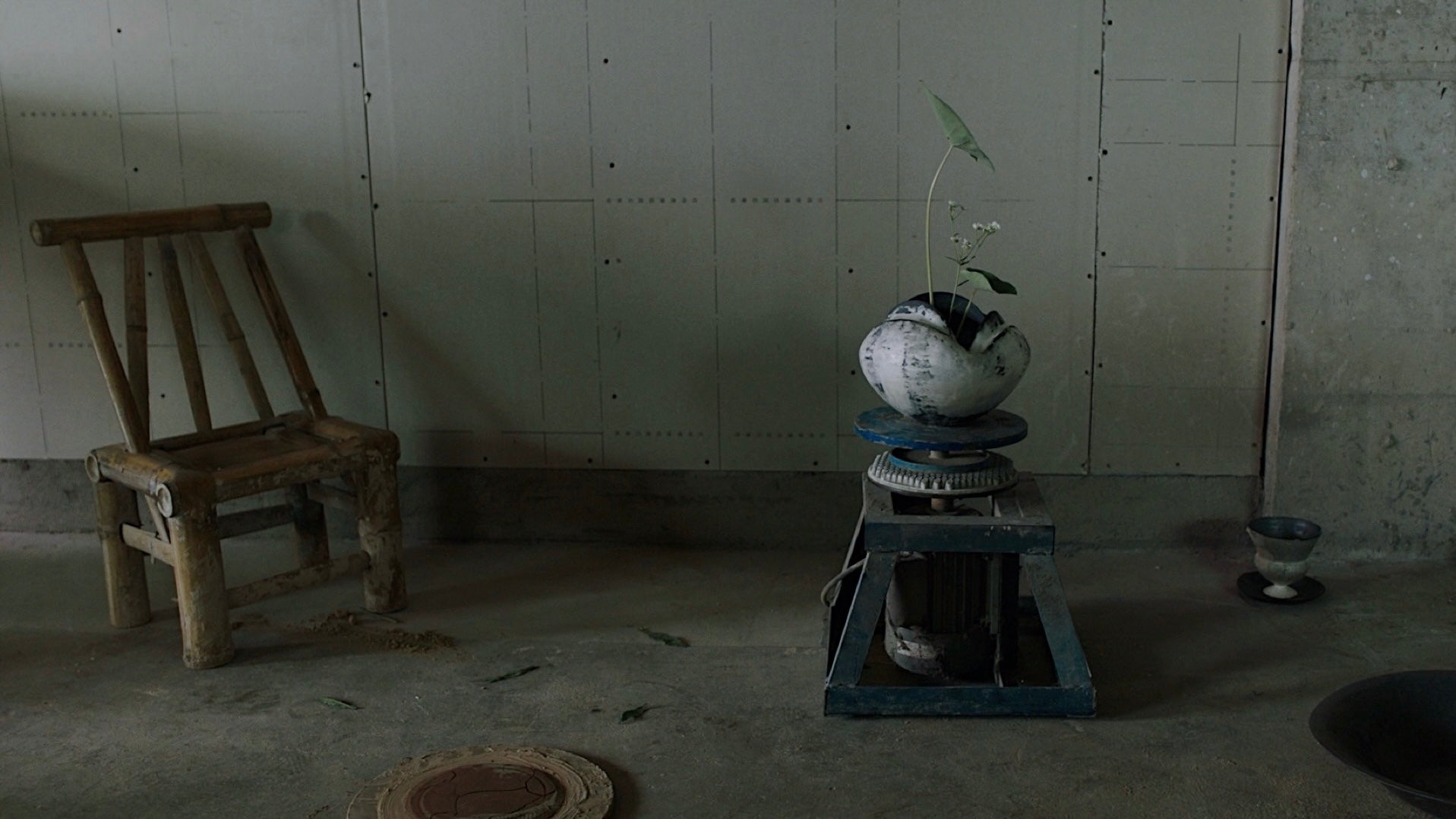
Ikebana (生け花) has a rigorous philosophy of vessel-as-ground — the container as the first statement, the arrangement as its consequence. Found arrangement (野趣插花) is less formal about this, but the logic holds whether or not you name it. A single stem of dried grass placed in a dark stoneware vase becomes austere, almost severe — the same stem in a clear low glass becomes suspended, tentative, a thought that hasn't finished forming. The stem has not changed. The vessel has changed what the stem is saying.
This is the quieter argument for why the objects we live with matter. Not as decoration. As context. A vessel made with intention creates a different encounter with whatever enters it. The imperfect branch becomes more imperfect, more itself, held by something that knows what it is doing. The object lives. And in living, it clarifies the space around it.

There is a Japanese concept, ma (間) — the pause, the interval, the charged emptiness between things. What ma (間) proposes is not absence but a different kind of presence: the silence between two notes is not the absence of music, it is music held at a different register. The space between a stem and the rim of its vessel is where the arrangement actually lives.
Found arrangement (野趣插花) asks you to find something, bring it inside, place it next to something made, and see what the encounter produces. A practice of noticing — the oldest form of aesthetic education. You learn what you are looking at by changing what surrounds it.
The chrysanthemum on the table this morning is almost finished. Outer petals have loosened and tilted away from the center. I keep not removing it. The arrangement is more interesting with the asymmetry — with the evidence that something is becoming something else.