Thinking with Hands | Revisiting Willy Guhl Through Wu Jingwen
Willy Guhl wrote in 1950 that "our age demands differentiated chair forms that correspond to the differentiated forms of sitting." (Willy Guhl, Studien über Sitzformen, Bauen+Wohnen, Nr. 8, 1950, pp. 25-29) It is a deceptively simple statement. What it describes is a designer fully awake to the contemporary conditions in which they work — not imposing a form, but listening for the one that the moment requires.

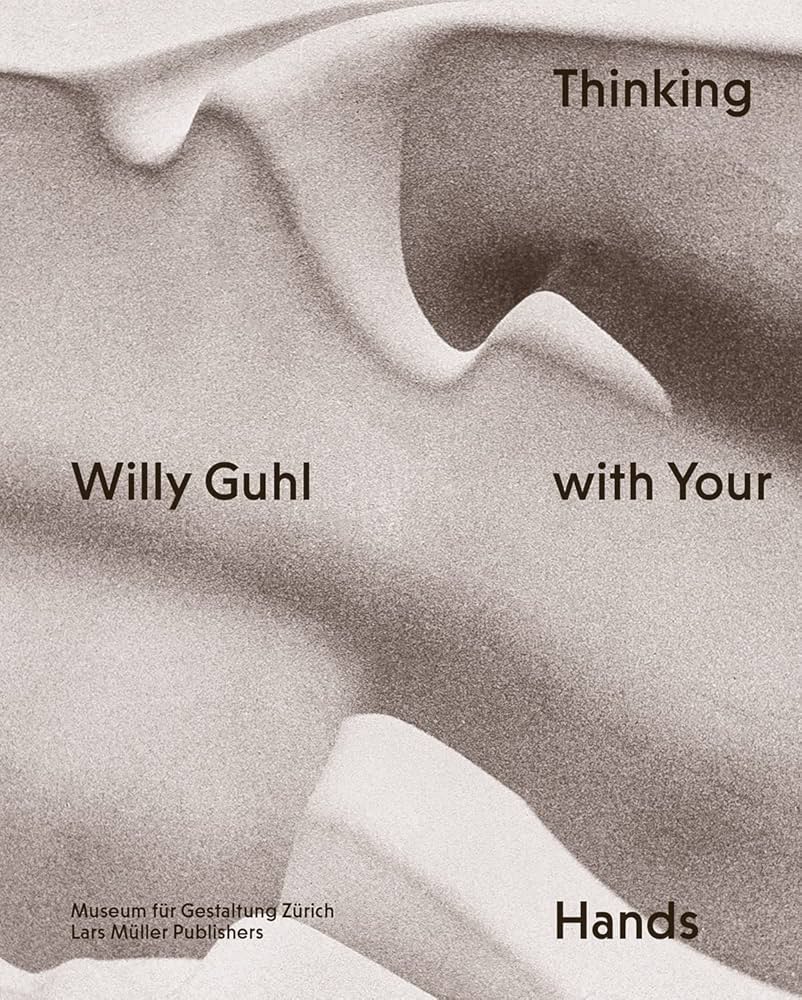
Guhl, Willy, and Renate Menzi. Willy Guhl, Thinking with Your Hands. Lars Müller Publishers, 2023.
Guhl's mid-century solutions were born of a world piecing itself back together from scarcity. He responded with the clean logic of industrial ingenuity: the relentless curve of the Loop Chair, cast in fiber cement to weather outdoors, to gather moss and stains and the slow scars of decades. Flat-pack furniture with zero material waste. His was a philosophy of thinking with the hands, where form followed the unmediated logic of material and need. The object was a record of its own making.
Wu Jingwen answers a different, more interior urgency. Not scarcity but saturation. Not the need for order but the longing for objects that do not shout — that are not consumed but conversed with, that welcome time not as a corrosive force but as the essential, final collaborator in what they become.
Use
Both begin with a decisive turn away from the ornamental. For Guhl, this was a rejection of the decorative comforts of Swiss Heimatstil — the nostalgic, regionally coded aesthetic that dominated Swiss design in the early twentieth century. His answer was structural: objects that derived their visual logic entirely from what they were required to do. For Wu, the refusal is quieter but no less deliberate. She bypasses the expected gestures of both categories available to her — the "elemental" minimalism that reads as generic East Asian restraint, and the "oriental" accent that reduces a deep material culture to surface decoration. What she proposes instead is neither of these things. Her work is rooted in a human-centred consciousness of use that owes as much to how a person actually moves through a day as it does to any aesthetic tradition.
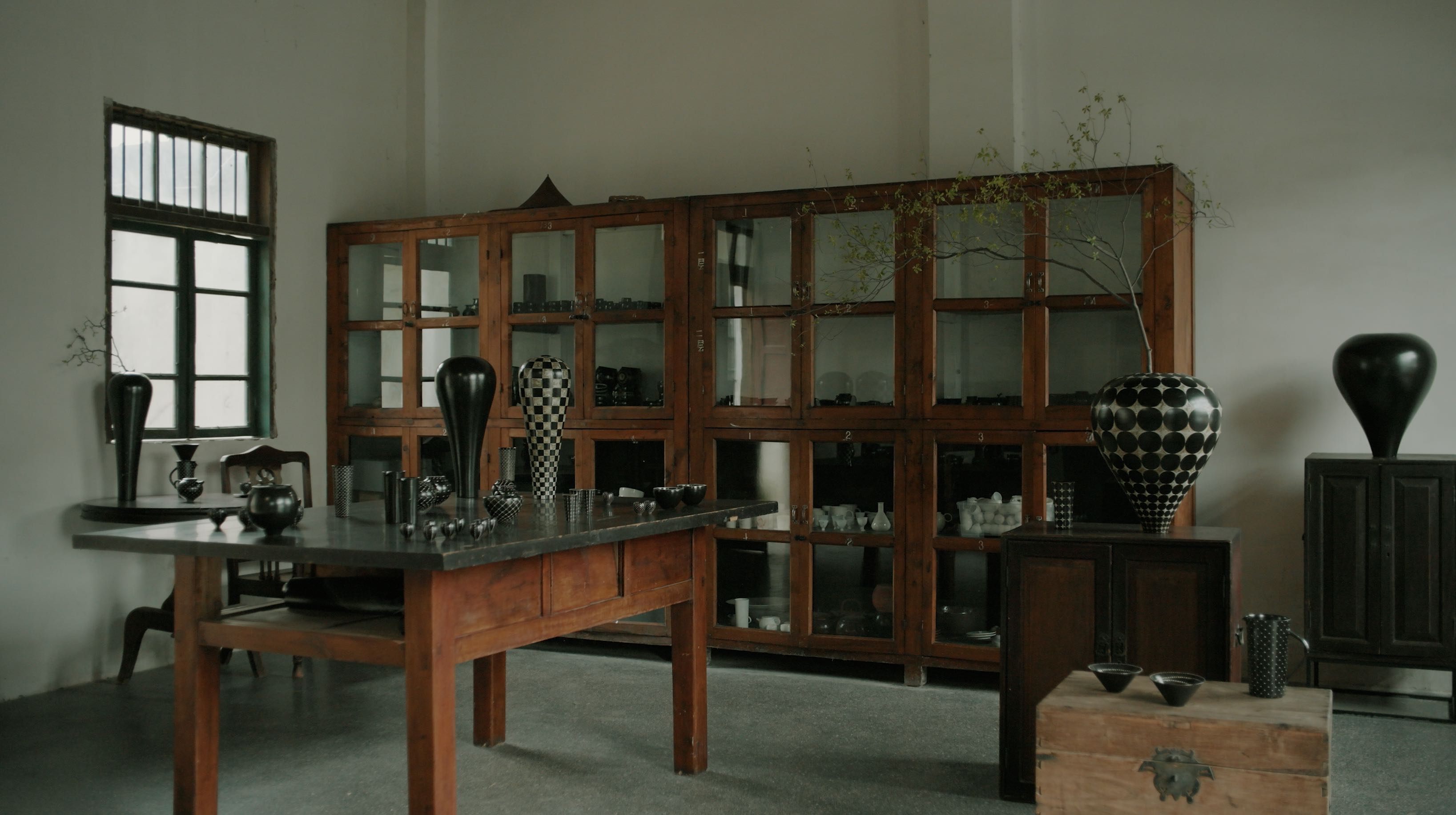
This is a more radical position than it first appears. To refuse both the decorative and the culturally legible is to offer the object without the reassurance of familiar categories. The work must justify itself through use alone — through what it actually does in the hands of whoever holds it, in the space it actually inhabits. A Wu vessel earns its place not by resembling something already understood as beautiful but by becoming more itself through being used. A tray that holds intention as readily as it holds objects. A vase that makes a single branch into a considered act. The versatility is not a feature. It is the argument.
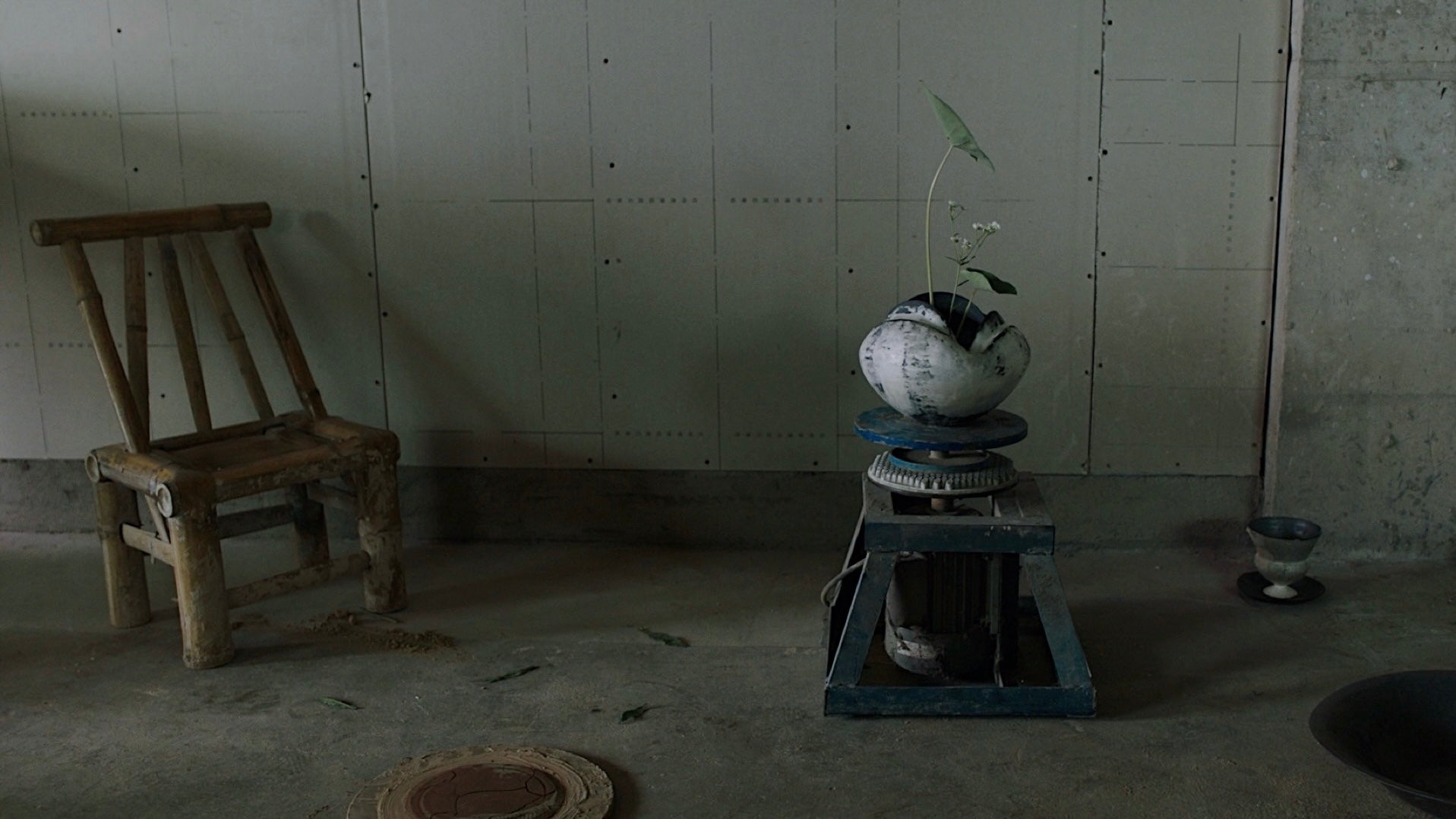
The process of making reflects this. Guhl's industrial molds captured a moment of material logic — the precise, reproducible instant when form and function converged. Wu's hands shaping clay capture a moment of human presence that cannot be reproduced. In each case, the object becomes a vessel for the maker and a recorder of time for the user. What separates them is the scale of that record: Guhl's is systemic, Wu's is singular.

Time
This relationship with time is where their deepest kinship lies, and where a decisive divergence opens. Both designers understood that the most honest objects do not resist time but are shaped by it — that weathering, use, and the slow accumulation of contact are not forms of damage but forms of completion. Guhl's Loop Chair was designed with this understanding built into its material: cast in fiber cement for the outdoors, it was never meant to look pristine. It was meant to gather moss and stains and the gentle scarring of decades until it became, in its own way, a monument to the passing of seasons. He did not fear aging. He courted it.
Guhl, Willy, Loop Chairs for Eternit AG Switzerland, 1954
Guhl, Willy, Loop Chair for Eternit SA, 1990s
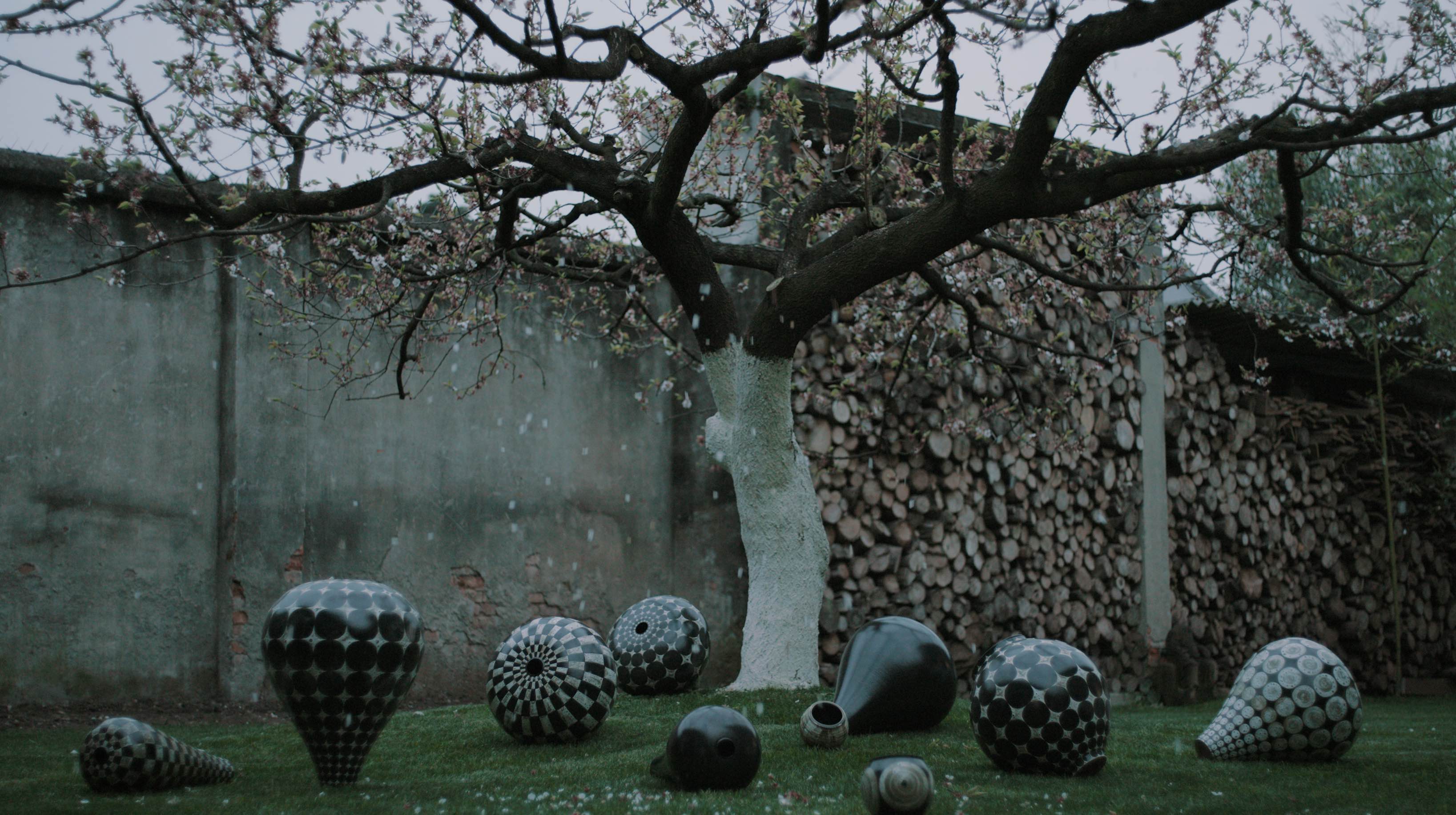
Wu elevates this collaboration from the external environment to the internal chemistry of the object itself. Where Guhl's chair weathers against the world outside, Wu's vessels transform in response to the world within — the specific air of a specific room, the heat of a specific pair of hands returning to the same cup each morning. Her glazes are not static finishes but living skins. The silver mellows to a unique gold, transformed by the particular chemistry of the atmosphere it shares with its owner. An iron glaze slowly deepens through repeated use and heat into a black, bronze-like texture. No two pieces age identically, because no two lives are identical. The vessel is not complete when it leaves the kiln. It is activated — beginning a silent, lifelong metamorphosis in the hands that hold it. This is not the static "classic." It is timelessness that is dynamic, and entirely personal.

System
Guhl's genius was systemic: smarter systems for production, distribution, and use. Flat-pack furniture, zero-waste manufacturing, industrial materials repurposed for domestic life — brilliant, logical solutions to the material and spatial problems of a post-war world that needed order and clarity. His thinking operated at the scale of the collective. A better chair for everyone who needed to sit.
In an age of material oversaturation, Wu embodies a new and introverted form of systemic thinking. The system is no longer one of industrial logistics but of personal ecology — and the shift in scale is the point. Where Guhl's objects were designed to serve universal human needs, Wu's are designed to serve a singular human life. The unrepeatable quality of her glazes and forms is not a limitation of the handmade process. It is its central argument. Each piece exists in a relationship with one owner, one set of conditions, one particular quality of morning light. The system is not a production line. It is a life.
The source of this system matters. It was absorbed not from architectural drawings or material science but from the mountain landscape of Wu's Fujian childhood and the meditative cadence of piano practice — disciplines that required her to internalize a rhythm until it became physiological, felt somatically rather than measured from outside. Growth is understood as a bodily knowledge. This is why it is tempting, and insufficient, to call her work wabi-sabi (侘寂). The Japanese aesthetic philosophy of imperfection and transience is a framework applied from the outside — a way of reading and appreciating certain qualities in an object. What Wu practices is not a framework. The acceptance in her work is not an aesthetic position adopted toward the material. It is a condition she inhabits, and the clay is where it becomes visible. One is a philosophy of looking. The other is a philosophy of being. The distinction is everything.
This marks the new significance of the maker's object. What it offers is not a new material or a more efficient form, but a new quality of relationship — between maker and clay, between object and owner, between the time of making and the time of use. The paramount innovation today is less about inventing a new material, as Guhl did with fiberglass and cement, than about discovering how a primal material like clay becomes a form of dialogue through human hands. The dialogue is the innovation.
Grammar