Visiting | He Yan’er & Mengji Nongga
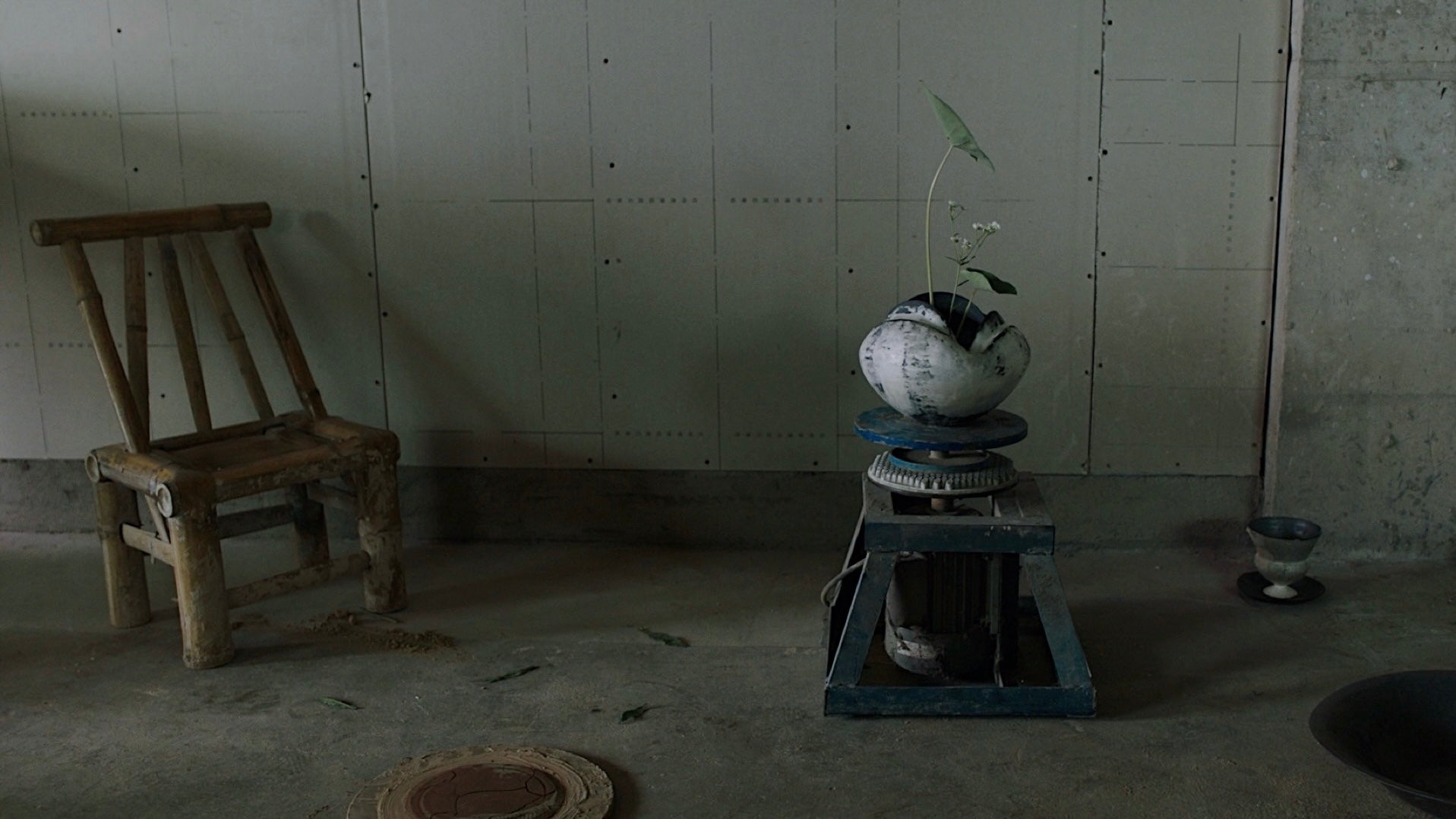
The first floor of He Yan’er space is dimly lit. Spotlights fall on the exhibited pieces — fabric and fragments collected across decades of village visits, dragon and bird motifs from Chinese minority communities that He Yan'er traveled to find specifically.

She is quiet in person, measured, unhurried. But ask her about the families she found these fabrics with — the particular village, the particular hands — and something shifts. Her eyes open differently. She knows every provenance, every journey.

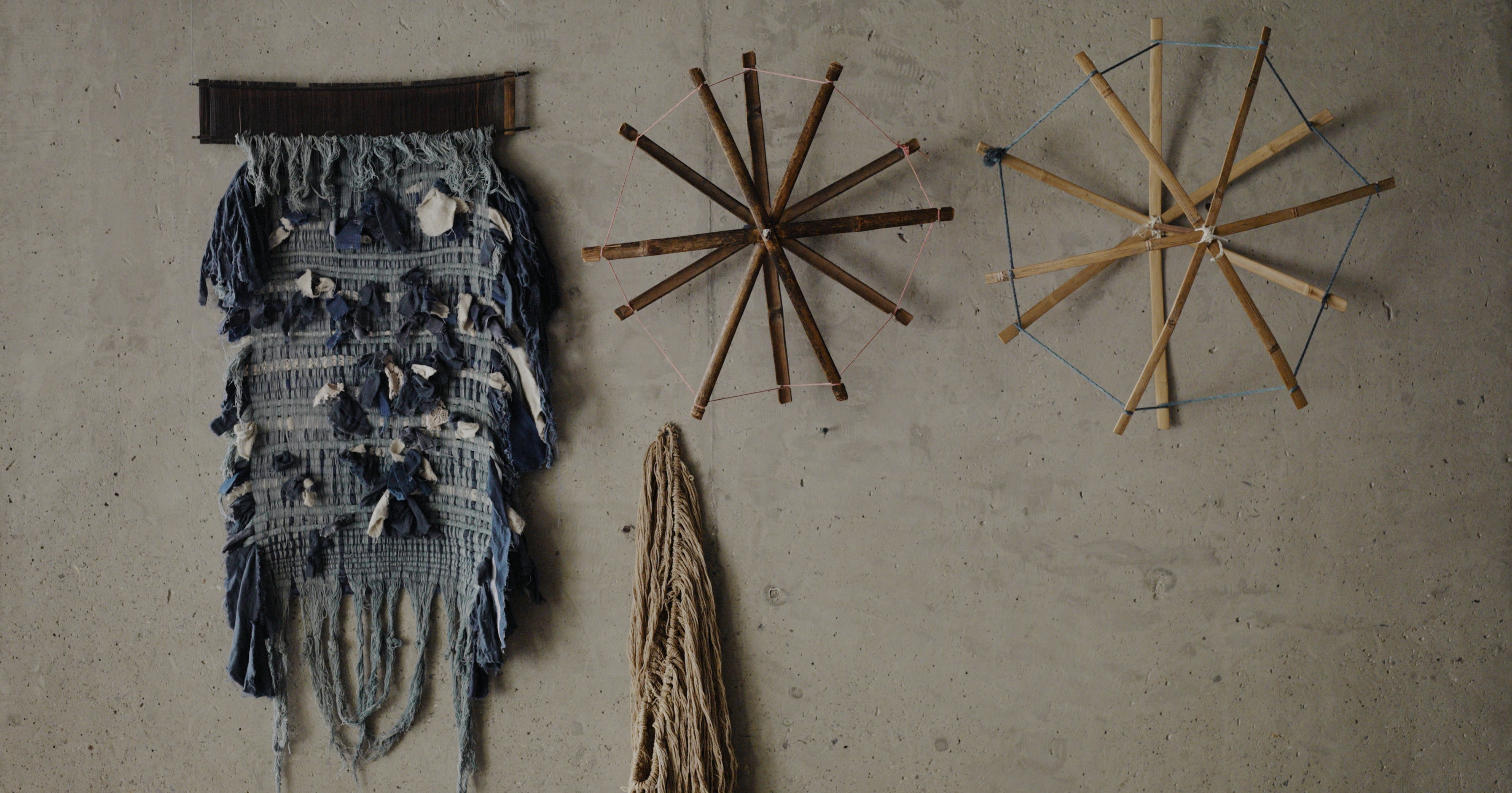
The second floor holds Mengji Nongga's own work: textiles displayed alongside a working loom, an archive, and a tea room. In the Miao villages of Guizhou where she has traveled since the early 1990s, the loom stood in the home, the dye vat in the courtyard, the cloth on the body. Making was less a category of activity than the texture of a day.
"Everyone is a life-maker. Every life-maker is an artist."


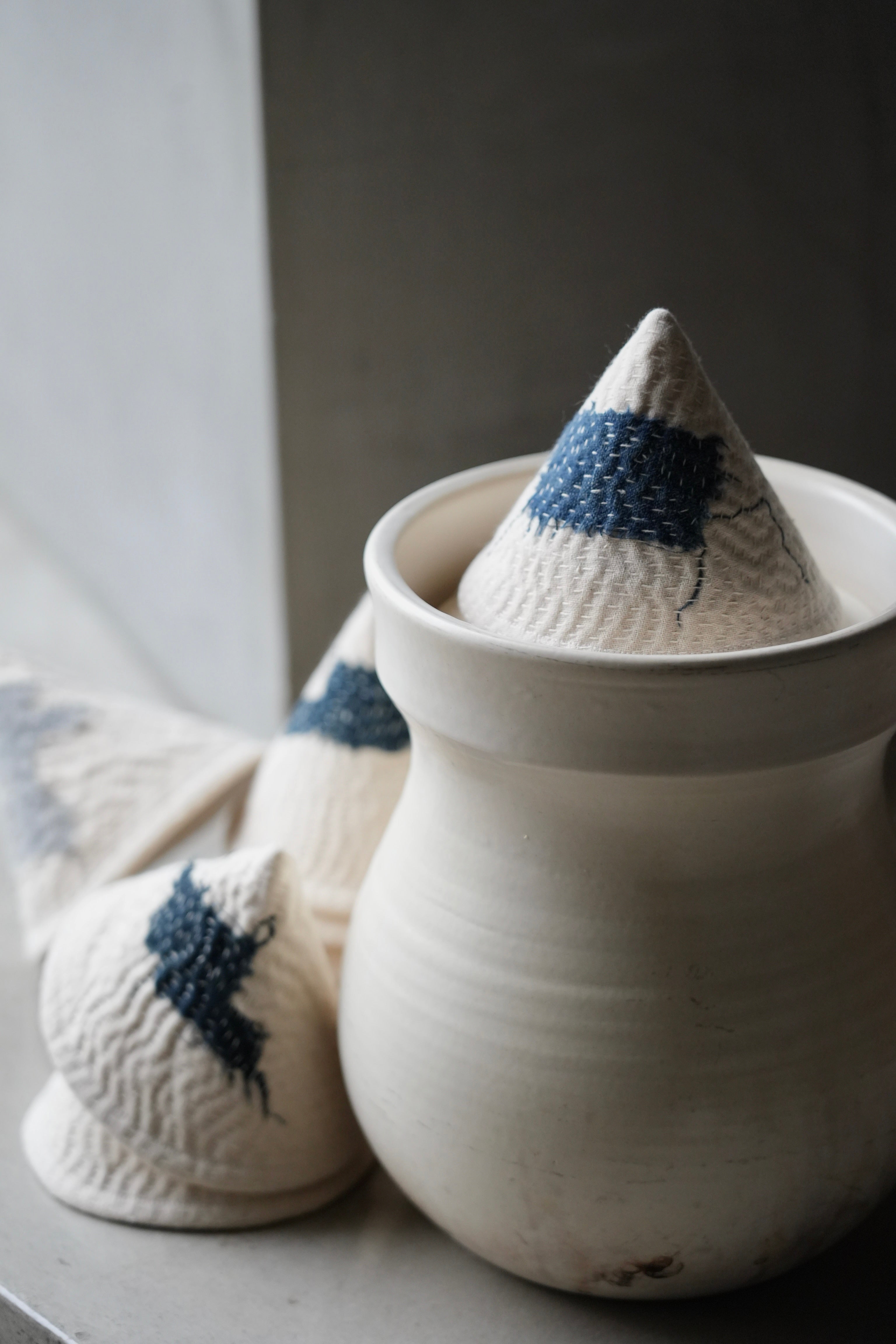
At the center of the exhibition space sits the wànniánbèi (万年被, ten-thousand-year quilt) — two versions, in dialogue. One is from the village: built layer by layer over generations from the cloth of those who had gone; what began as an act of scarcity in a mountain community where nothing from outside could reach accumulates into a container of warmth, feeling, and the traces of lives gathered one layer at a time. The other is He Yan'er's own interpretation — a contemporary rug, quiet on one side, that when flipped reveals its interior: scraps stitched together, each piece carrying its own history. The village wànniánbèi and her response to it, placed together. Continuity and the distance between generations made visible in a single room.


Before textile, He Yan'er was a professor of biology. The pivot sounds unlikely until she explained: she was always interested in lifeforms — in life itself, in how living things carry information forward and transform it through time. Textile, she found, does exactly this. It is a living system of transmission, as legible and as complex as any organism. The thread was already there.

Her grandmother kept every scrap of fabric left over from the clothes she sewed, organized into perfect geometric stacks. That image of the perfect cube has stayed with her for thirty years. She has never been able to recreate it in her grandmother's manner, not in perfect geometry. So she circles around it — piling fabrics and knotting piece to piece directly, feeding scraps back through the loom, arriving by a different route at the same ideal of order, neatness, composure.


What she found in the Miao villages was a community that had been doing something similar for generations — carrying knowledge forward through the hands, transforming it slightly with each transmission, keeping the essential thing intact. She recognized it. The biology professor who left her post to travel to villages where women wove without having been taught was not changing direction. She was following the same question into different material.

Mengji Nongga — the name is Miao dialect for come home for dinner, the call before the return — is built from the same instinct.
Not the home itself, not the meal, but the moment when you are still some distance away and the voice calling your name has already reached you.
The space she built across four floors in Beijing is an answer to that call: a shop and café on the ground floor that open into each other without ceremony, the second floor where collected knowledge and active making share the same level, a design studio above, and at the top a fully decorated artist studio — furnished entirely with Mengji Nongga textiles and objects chosen from makers across China and Japan — kept for visiting artists, each arriving to find a space already warm, already prepared. The same person who could not recreate her grandmother's perfect cube built a space where the attempt never has to stop. Where making and living, collecting and weaving, teaching and hosting occupy the same building because they have always been the same thing.


What Mengji Nongga carries into a home is this understanding at a daily scale. The table mat, the runner, the coaster — objects made from natural fiber, placed where the morning cup lands. Material that knows where it comes from.