Visiting | Wu Jingwen
Wu Jingwen was not always a ceramicist. After years of rigorous study in animation design, she took a restorative period — and an invitation to a friend's studio in Chengdu introduced her to clay. She describes it not as a medium she shapes, but as an essence she uncovers. Each piece already exists in the clay, waiting to be found.
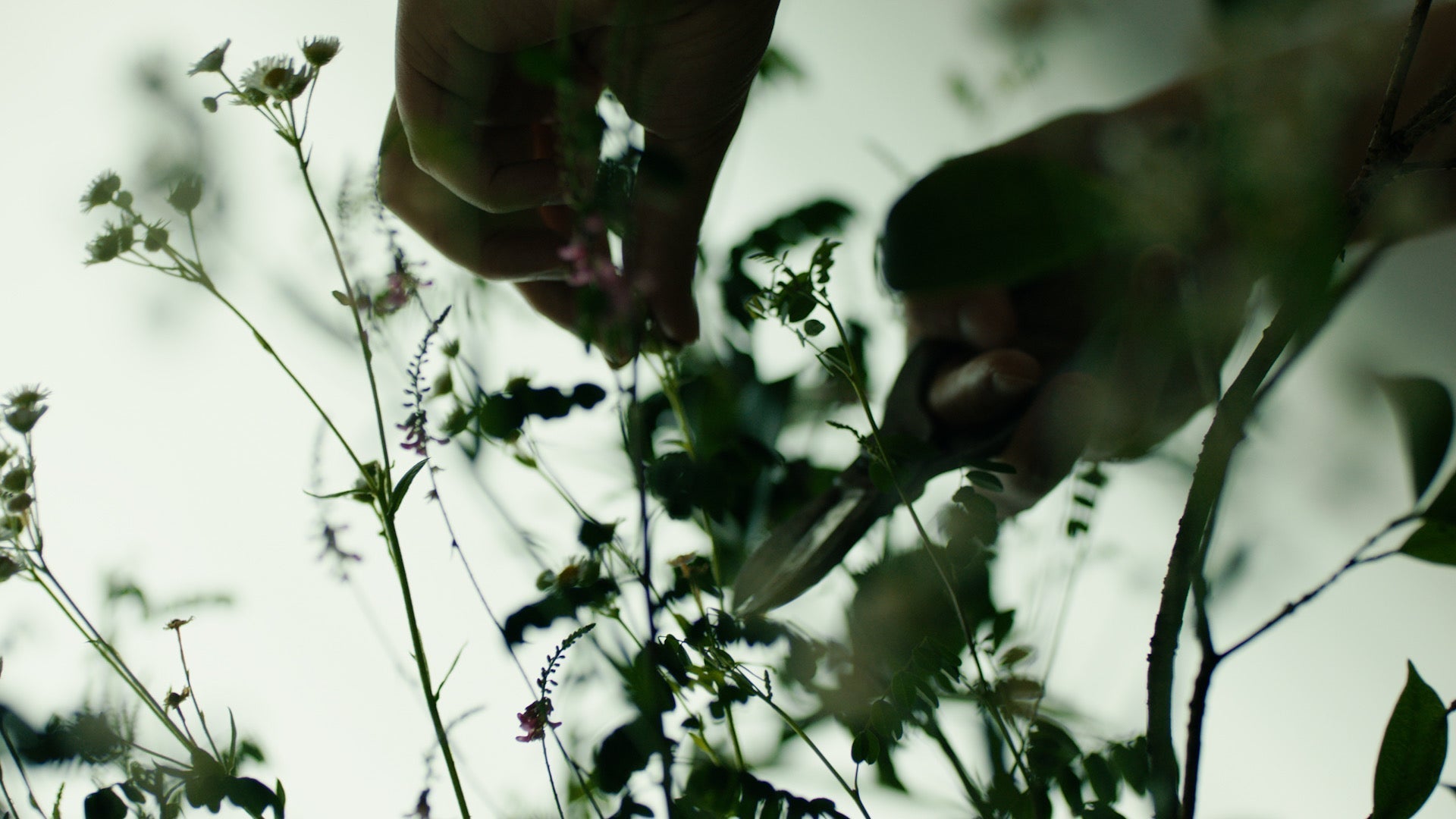
She was born in Nanping, Fujian, in the shadow of the Wuyi Mountains. The rhythm of that landscape — seasonal, unhurried, attentive to small change — has never left her work. In her studio in Jingdezhen, the gradual shifts of the seasons and the intimate details of plant life find their way into every piece. She also loves Bach. The piano's demand for melodic construction, for the interplay of action and interval, echoes the way she approaches the wheel.
“I wish to see new lives animate from the vessels I make.”
Her forms are architectural and spare, but never closed. Vases, tea tools, trays — each piece adapts to whoever holds it, inviting a use that was not prescribed. There is something Socratic in this: the work does not instruct. It draws out. The minimalism is not restraint for its own sake — it is the result of removing everything that does not need to be there, until what remains is both entirely purposeful and entirely open.
There is a stillness in her work that is not passivity. Clay, wheel, hand — slow, considered, alive to the material.
Each piece is not just crafted but lived — holding whatever life brings to them. A tray that becomes a place for keys, then for letters, then for a single branch of something found on the way home. A cup that takes on meaning from the hands that reach for it each morning. Like a companion. A quiet celebration of the mundane turned sublime.