Article: Before “Handmade”
Before “Handmade”
On Craft, Humanness, and a Term Born from the Machine
The word "handmade" did not exist before the Industrial Revolution. It had no referent. Before the late eighteenth century, everything was made by hand — pottery, textiles, furniture, vessels for eating and drinking and storing. The category "handmade" requires its opposite to make sense; it is a word generated by absence, coined at the moment when making by hand became exceptional rather than universal. To use it now, as a mark of value, is already to acknowledge how completely that world has changed.
Before the Industrial Revolution, all such products were handmade — not as a conscious choice or a mark of distinction, but as the only available condition. Objects were the texture of daily existence, shaped by hands that knew their materials the way a language is known: some through formal apprenticeship and guild transmission, others through observation and repetition, the body absorbing across years what could not always be put into words. The knowledge lived in practice before it lived in instruction.
The Industrial Revolution did not destroy this tradition but made it invisible. Under the modern industrial system, the personal element, which is so important in all forms of art, has been thrust farther and farther into the background, until the production of objects, instead of growing out of organic necessities, has become a commercial affair. The consequences of this shift were social as much as aesthetic: the maker was separated from the made, the hand from the mind, the process from its product. What had been a continuous act of attention — material known through the body over time — became a series of discrete operations that no single person needed to understand in full. The object arrived complete, requiring nothing of the person who would use it.
John Ruskin was among the first to name what was being lost — the refusal, in reducing a person to a single repeated operation, of the intelligence that making demands when pursued seriously. The Arts and Crafts Movement that followed extended this argument into practice, though it arrived at its own contradiction: craft elevated into a luxury category, serving as a marker of taste rather than a transformation of the conditions it claimed to resist.
The Japanese philosopher Sōetsu Yanagi arrived at the same territory from a different direction — and at a deeper philosophical position. Founding the mingei (民藝, art of the people) movement in the 1920s, Yanagi was the first to fully explore the traditional Japanese appreciation for objects born, not made. His argument turned on anonymity: the most beautiful objects in the Japanese folk tradition were produced by craftspeople whose names no one remembered, working within inherited forms without the pressure of individual self-expression. He saw in the Korean ceramics of the Yi dynasty, made in large quantities under tradition by anonymous craftsmen for five hundred years, a profound, transcendent beauty. The anonymity was not incidental. The craftsperson who works within a tradition, without the need to innovate or to sign, achieves a particular kind of freedom — one not needing to prove anything. The object produced in that state carries what Yanagi called shibui: a quality of simple, subtle, unobtrusive beauty that does not announce itself and does not require interpretation.
Yanagi sees folk art as a manifestation of the essential world from which art, philosophy, and religion arise and in which the barriers between them disappear. This is the claim worth sitting with. The rice bowl and the meditation practice and the formal garden are not distinct categories of human activity that happen to share a cultural context. They are expressions of the same underlying understanding: that attention, applied to material over time, produces something that exceeds the sum of its parts.
Richard Sennett's The Craftsman (2008) secularizes this argument for a Western academic audience. Where Yanagi grounds beauty in tradition and anonymity, Sennett locates it in the act itself — arguing that "making is thinking," that craftsmanship is an enduring human impulse to do a job well for its own sake. The hand working with resistant material develops a form of intelligence not reducible to instruction: repetitious performances that are not boring, in which the craftsman anticipates each time that something important is about to happen. The knowledge, in other words, is not held in the mind but accumulated in the body — and it is precisely this accumulation that the object carries forward once the making is done.
What does this mean now, in an age when generative artificial intelligence can produce in seconds an image of any object that has ever existed, when industrial design optimizes simultaneously for cost, durability, ergonomics, and aesthetic trend, when the logic of mass production has been so thoroughly internalized that the word "handmade" has become a marketing term applied to products manufactured in batches of ten thousand?
Two things, at minimum.
The first is epistemological. Making by hand produces a form of knowledge that making by specification does not. Sennett is careful here: material challenges like working with resistance or managing ambiguity are instructive in understanding the resistances people harbor to one another or the uncertain boundaries between people. The hand that has learned to follow the grain of wood, to read the kiln's temperature in the color of the clay, to feel the moment when lacquer has reached the right consistency for the next layer — that hand has developed a form of intelligence that is not transferable to a prompt or a parameter. It exists in the body, accumulated through years of physical negotiation with resistant material, irreducible and unoptimizable.
The stakes of this claim extend beyond philosophy of knowledge. The craftsperson who has spent twenty years learning a single material is not inefficient. They are the custodian of a form of knowing that no system can inherit, compress, or reproduce. To value what they make is to insist that this kind of knowing matters, that the human capacity for sustained, embodied, material attention is not a redundancy to be automated away but a faculty worth preserving.
The second argument is more intimate. A machine-made cup is frictionless — it asks nothing of you, it offers no resistance, it has no irregularity that catches the eye or the hand. A thrown cup with a slightly uneven rim, a glaze that shifts from morning to afternoon light, a weight that required someone to make a decision about — that cup creates a small interruption. Not an inconvenience. A moment of contact. You notice it. And noticing, even briefly, even unconsciously, is the beginning of being present. Human irregularity is the record of time lived — the trace of a hand that had been doing this for twenty years, on a particular morning, under particular conditions that will never repeat. When you hold that record, you are holding someone else's time. And holding someone else's time, regularly, as part of daily life, changes how you hold your own.
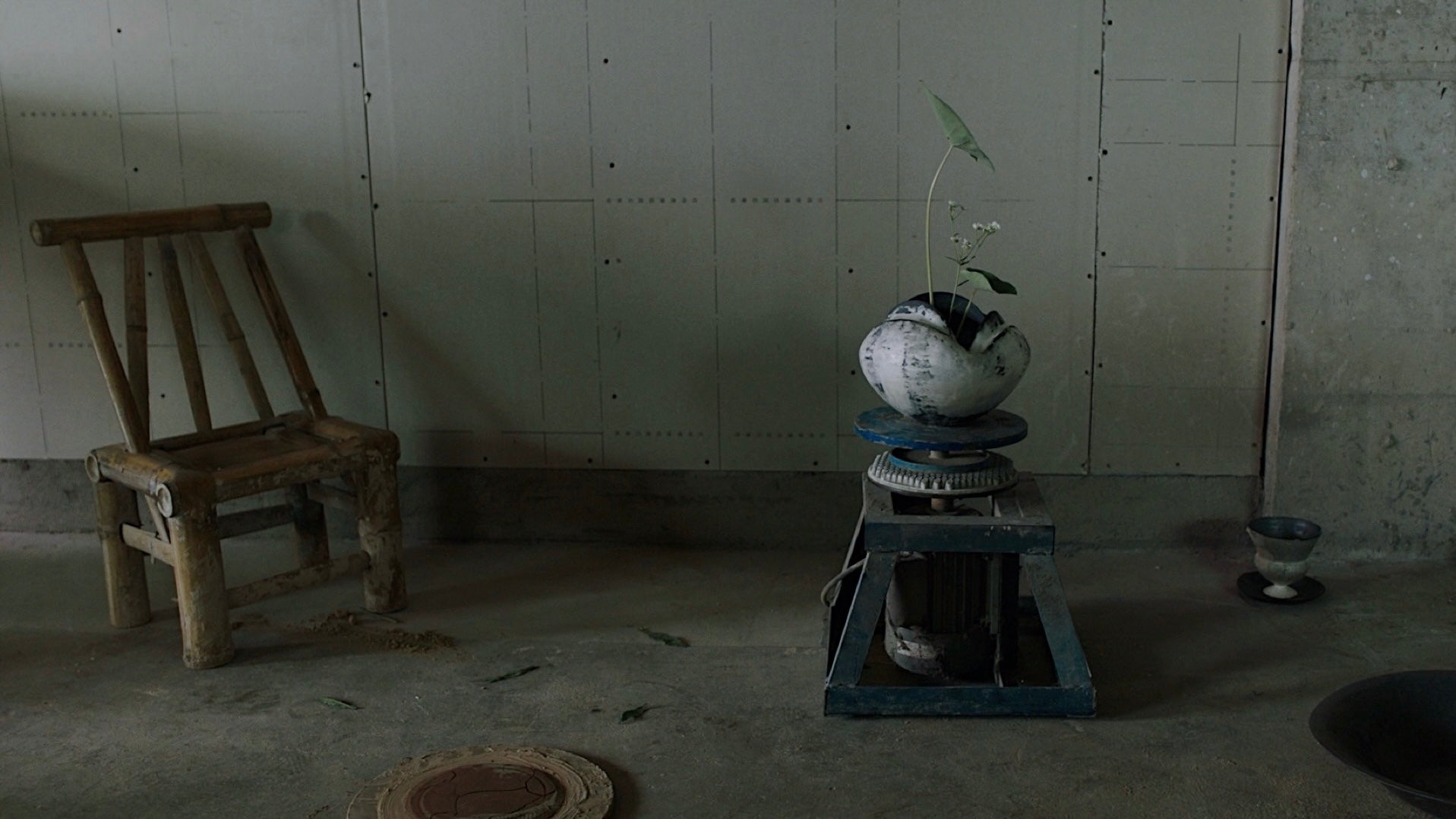
Agnes Martin understood this at the level of line. In her graphite grids, the slight tremor of each hand-drawn stroke carries an emotional register that a mechanically ruled line cannot produce — what repetition reveals in her work is the accumulation of a sustained inner state made material, mark by mark. The handmade object operates on the same principle at the scale of daily use. The rim, the surface, the particular quality of a glaze between matte and gloss — these reach the person who lives alongside them not through narrative or explanation but through contact, accumulating quietly, grounding without intruding. This is what distinguishes these objects from the wellness category they are sometimes reduced to. Mindful living is something you perform. Living alongside objects that carry humanness is something that simply happens — through the weight of a cup, the surface of a glaze, the particular quality of attention a thing demands when it has been made by someone who understood it. The presence is in the object.
This is what makes the revival of interest in handcraft in the contemporary moment something other than nostalgia or luxury positioning. The craft revival reassesses the discourse of the artist as genius and the artist as worker — the elevation of fine arts above handicraft was an effect of the social division of labour in which the knowledge, skills and privileges of the master artisan were distributed among specialists. To return to craft is to refuse that division — to insist that making and thinking are not separable activities, that the knowledge produced by a hand working with material over time is as serious and as irreplaceable as any knowledge produced by a mind working with concepts. In stitching, carving, and molding, one asserts that efficiency is not humanity's highest value.
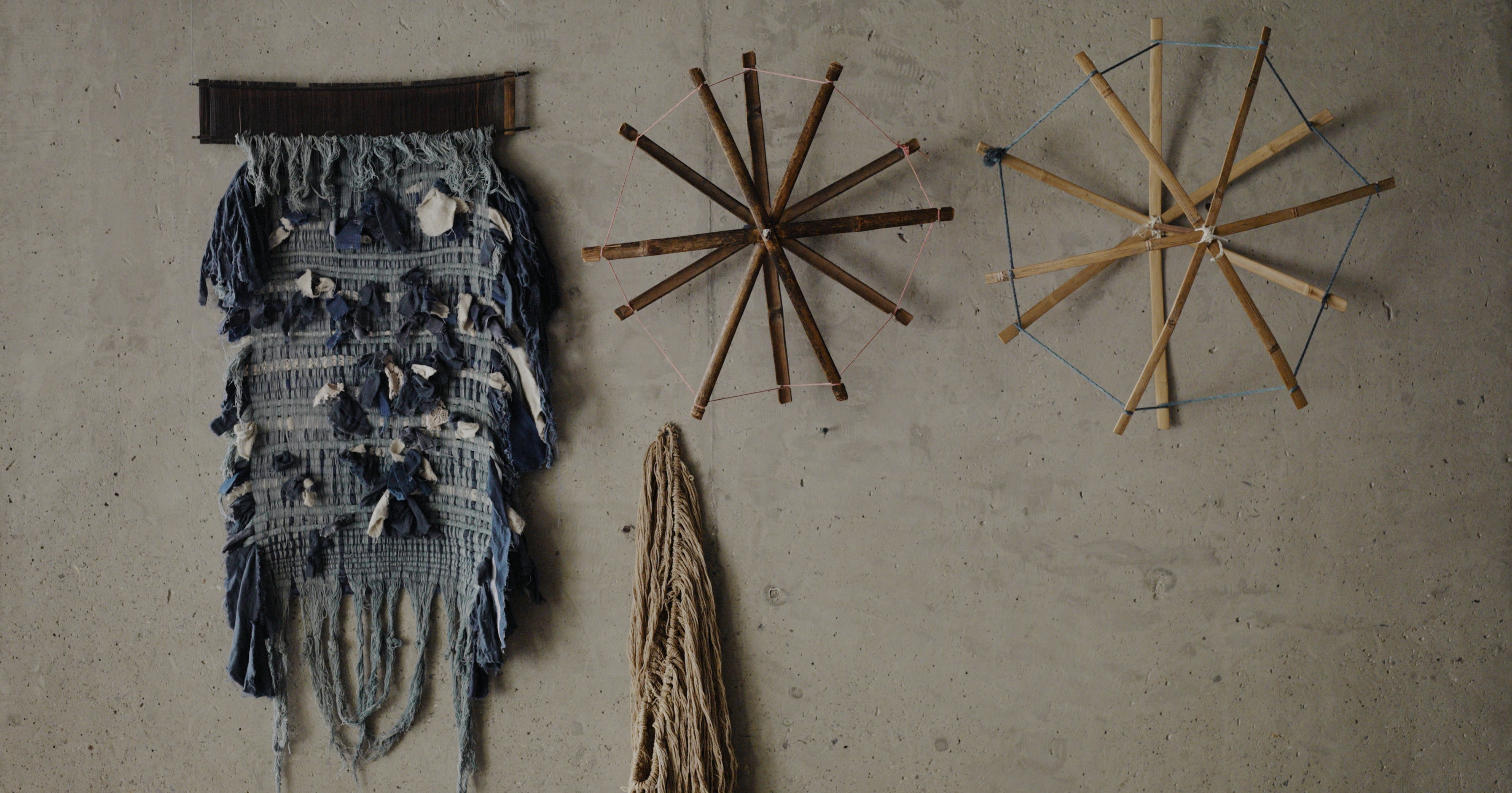
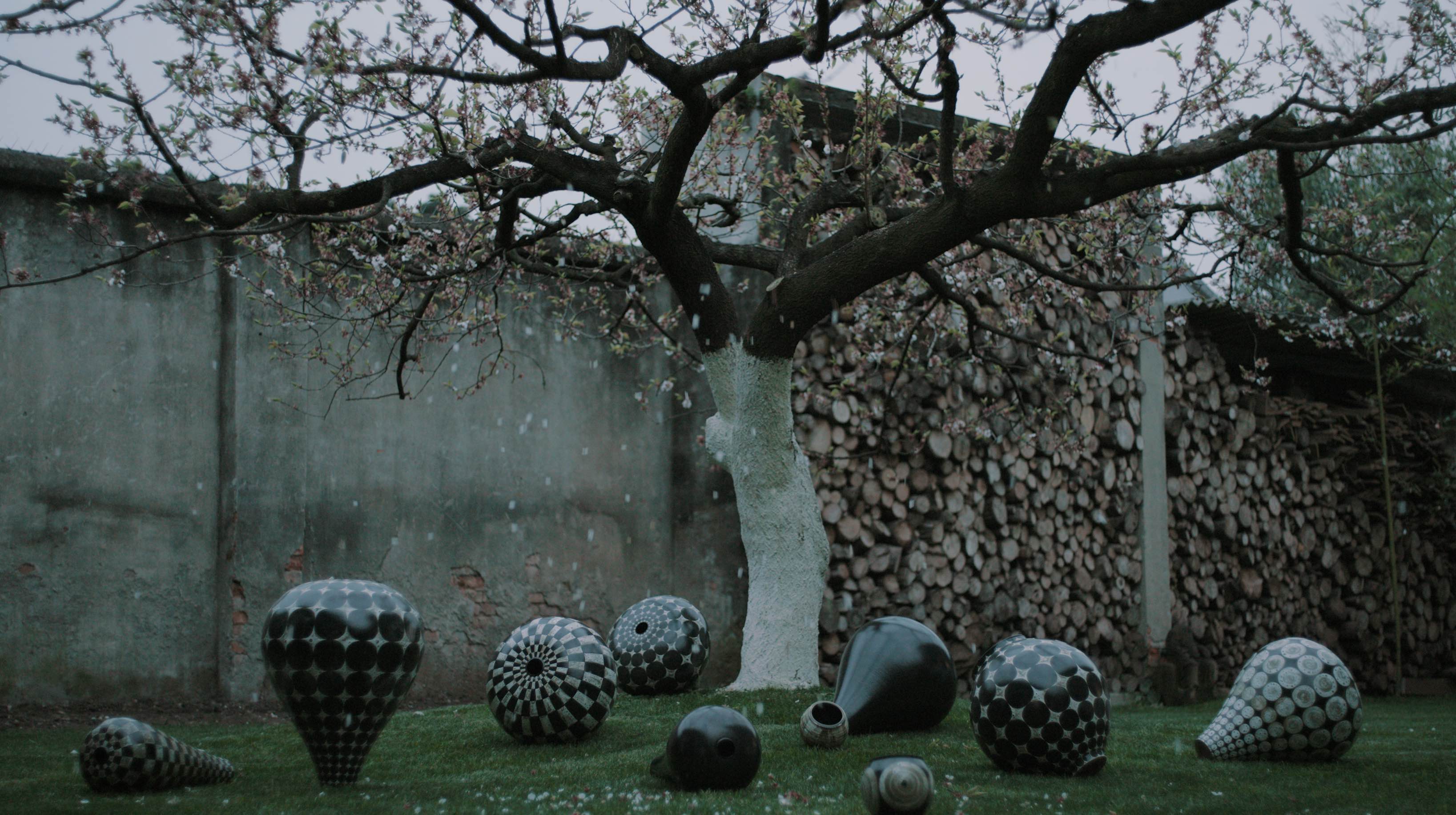
The mǔhuā — the mother-cloth, on which a Miao woman stitched every motif and color she knew before passing it to the next generation — is a textbook in which three or four generations of slight variation are readable in the colors by age. The wànniánbèi is a container of lives gathered one layer at a time. Dong Dan's black glaze, produced from Sichuan clay and straw ash, carries the specific quality of the material and the maker's decades of working it. Kenichi Sasakawa's bubbles, suspended in glass at the moment the material cooled, record the exact conditions of a specific act of making. These objects do not require explanation to be experienced. They require only the quality of attention that Ruskin and Yanagi and Sennett are each, in their different ways, arguing we owe them.
The hand that made something left something in it. The person who lives alongside that object long enough eventually absorbs it — the way Xu Fei describes an arrangement as becoming nutrition for the spiritual life without being remembered as a specific event. The object does not only endure as a statement but also as a presence. In an age when so much of what surrounds us was produced without a single human hand understanding the whole of what it was making, that presence is not a luxury. It is a form of contact that has no substitute.